Long Answers · 6 min read · By the house
What The Beer List Is Actually Telling You
A close read of beer menus as documents — what the length, the categories, the font choices, and the absence of certain styles reveal about who wrote the list and who the bar thinks is coming through the door.
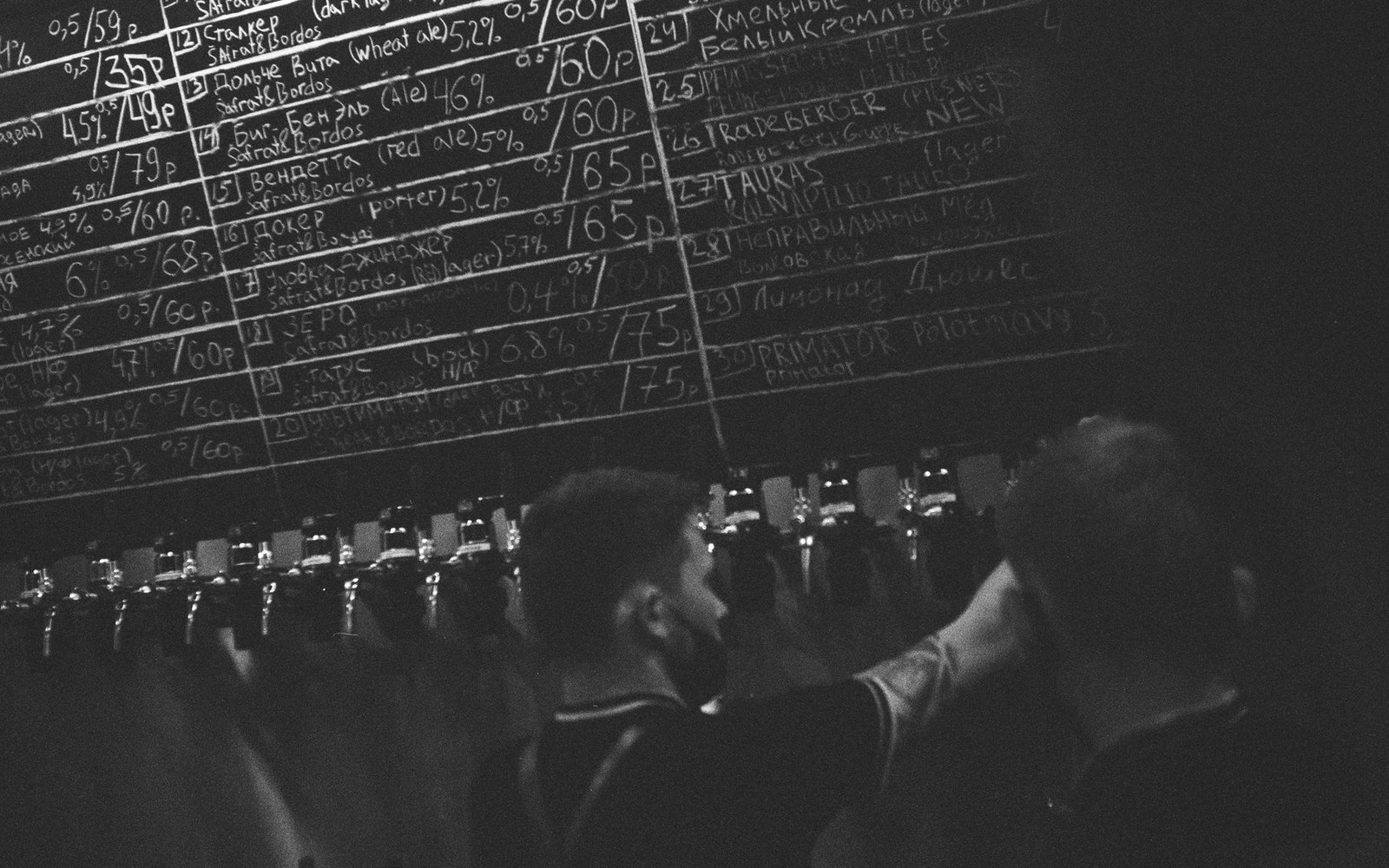
A beer menu is a document — read it before you order
The beer list arrives before anything else. Before the bartender has clocked you, before you have found your seat, often before you have unbuttoned your coat — the menu is already in your hand, or chalked above the bar in someone's optimistic cursive, or recited at you from memory by someone who is plainly hoping you will ask questions. In any of these forms, it is not a neutral list. It is a set of decisions made by people who had a budget, a theory about their customers, and a relationship with their suppliers. Reading it takes about thirty seconds, and it tells you almost everything you need to know about the room you are sitting in.
Start with length. A beer list that runs to four options — lager, something amber, a stout, a wheat beer — is a list that has been curated down to the point where the bar is saying: we are not really a beer destination, and we are not pretending to be. This is not a criticism. It often means the spirits are serious, or the food is the point, or the room is old enough that it has simply never needed to be more than what it is. The restraint is information. Four beers, chosen with any care at all, is a more confident statement than forty beers chosen anxiously.
A list of forty beers, on the other hand, wants to be taken seriously on its own terms, but length alone is not credibility. What you are looking for is whether the list is actually organised, and whether the organisation makes sense. If everything is sorted by brewery or by country, that is a list built for the person who already knows what they want — which can work, but tends to strand anyone who arrived without a plan. If the list is arranged by style, that is a bar attempting to be a teacher as well as a seller, which is an honourable thing to attempt and takes real knowledge to do well. Style organisation only works if the styles are actually distinguishable on the list; a section called "hoppy beers" that contains a pale ale, a West Coast IPA, a session IPA, and a hazy IPA is not a section — it is a pile.
Notice what the list calls things. "Craft" as a category header is a word that has been emptied by overuse; if a bar is still using it as a sorting principle, the list was probably written several years ago and has been updated piecemeal since, which explains the strange gaps you will notice once you start looking for them. The absence of a lager section in a bar that is clearly not a specialist operation usually means the bar bought a keg lager under pressure from a distributor and does not particularly want to draw attention to it, which is at least honest. The absence of any British or Irish styles in a long and otherwise ambitious list often tells you something about the age and background of whoever wrote it.
The font and the physical form of the list matter more than they should. A laminated A4 sheet with a bar's name at the top in a font last seen on a smoothie van tells you that the beer selection changes slowly, if at all, and that whoever runs the place has other things to think about. A list printed on heavy card stock with half the items already crossed off in pen tells you something is moving quickly, that the buyer is reactive, and that asking what just came in is worth your time. A chalkboard with elaborate illustration and pricing that makes no distinction between a three-hundred-millilitre glass and a pint is a bar where the visual identity has been given more thought than the logistics of ordering, and you should account for this when deciding what to ask for and how precisely to ask for it.
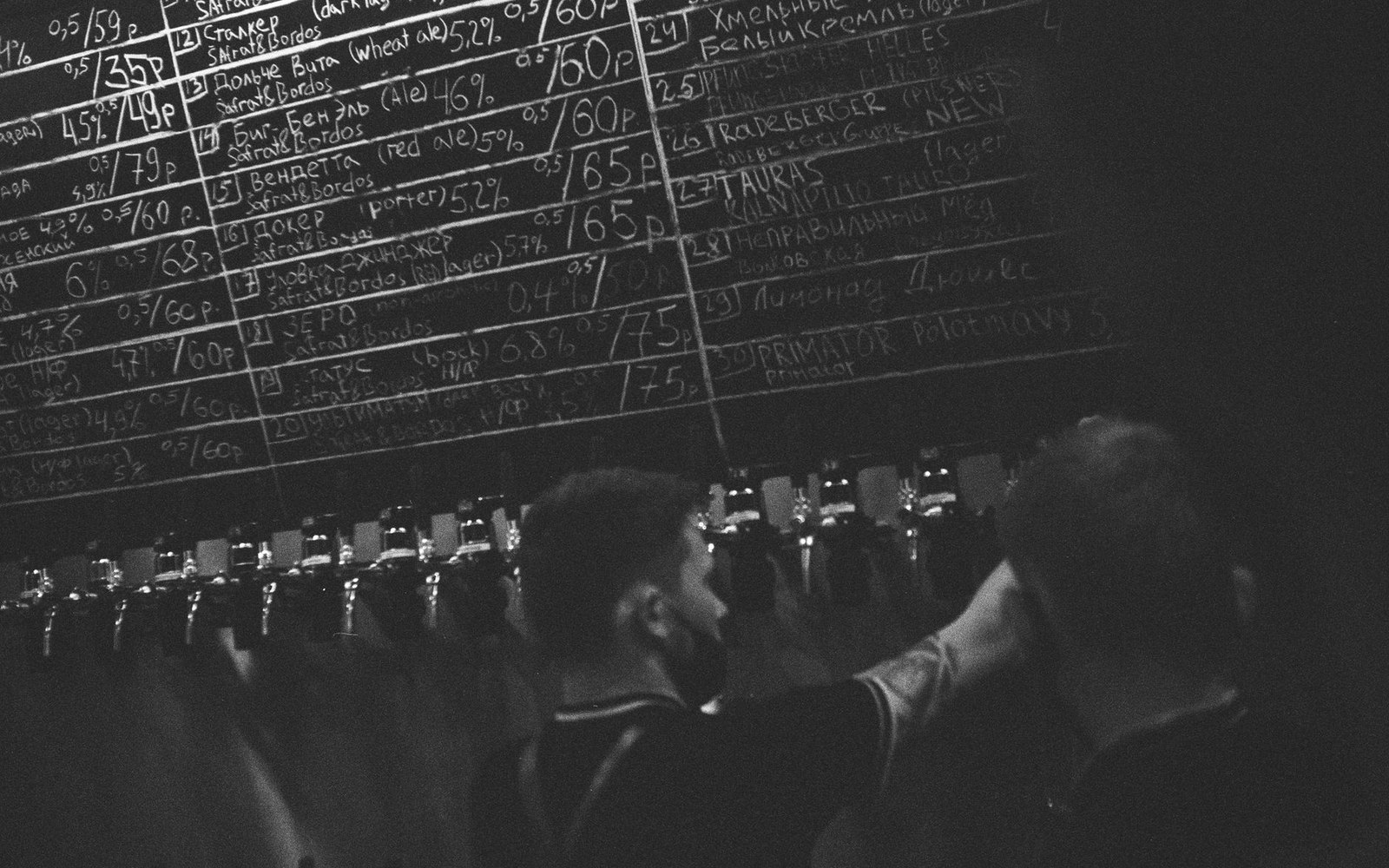
Pay attention to the brewery names on the list and notice how many of them are local. A bar that carries twenty beers, fifteen of which come from the same metropolitan area, has made a political decision — about local sourcing, about supplier relationships, about the identity it wants to project. Whether that decision results in a good list depends entirely on whether the local breweries are actually doing interesting work. Regional loyalty that produces a genuinely varied set of styles is one of the best things a beer list can do; regional loyalty that produces fifteen subtly different hazy pale ales, all priced the same, is regionalism as inertia rather than conviction.
The presence of certain styles acts as a signal. If the list carries a Berliner Weisse or a Gose — the tart, low-alcohol German wheat-beer styles that experienced a revival in the past decade or so — someone at the bar has been paying attention to fermentation trends and is buying for a drinker who knows what those words mean. If it carries a cask ale, real ale served from a handpump at cellar temperature, that is a bar where someone cares enough about condition to do the additional work that cask requires — and condition is difficult to fake; either it tastes right or it does not. If the list carries a Märzen or a Dunkles Bock — the maltier, bottom-fermented German styles that are still underrepresented outside specialist accounts — someone on the buying side has a specific and slightly unfashionable affection, and that specificity usually means the list has been built from taste rather than trend.
The prices relative to each other are also readable. If everything on the list is priced within a narrow band regardless of alcohol content, format, or brewery size, the bar is probably not thinking about this very hard, and may not be charging correctly for its rarest or most expensive stock. If the range is wide and the pricing tracks something — volume, strength, rarity, import cost — someone has thought about the economics. A bar that charges the same for a two-hundred-and-fifty-millilitre pour of a double IPA as for a pint of something sessionable has either made a deliberate decision about its margin or has not noticed the difference, and both are worth knowing.
None of this is about arriving with a checklist. It is about letting the document in front of you tell you where you are before you start committing to things. The beer list reveals the same things a back bar does: what the room values, who compiled it, how seriously it is being maintained. A list that looks like it was assembled by someone who drinks beer, rather than someone who buys it to fill a tap, reads differently — you can feel the difference in the specificity of the descriptions, if there are any, and in the internal logic of what is alongside what. When the list has that quality, you can order with more confidence, because the person who put the list together was imagining someone like you when they did it.
What to do when the list gives you nothing to work with — when it is plainly an afterthought, or when everything on it is unfamiliar in the worst way, which is the way of things designed to seem interesting rather than to be interesting — is to ask, simply, what is good right now. Not what is popular, not what came in this week, but what is good. A bartender who has any investment in the list will answer without hesitation. One who cannot answer is as much information as one who can, and either way you know something about where to set your expectations before you commit to the first round.