Long Answers · 4 min read · By the house
How To Read A Back Bar
A practical guide to interpreting the bottles on display behind the bar as evidence — what their arrangement, their labels, their condition and their selection reveal about the bar's priorities and the drinks it actually sells.
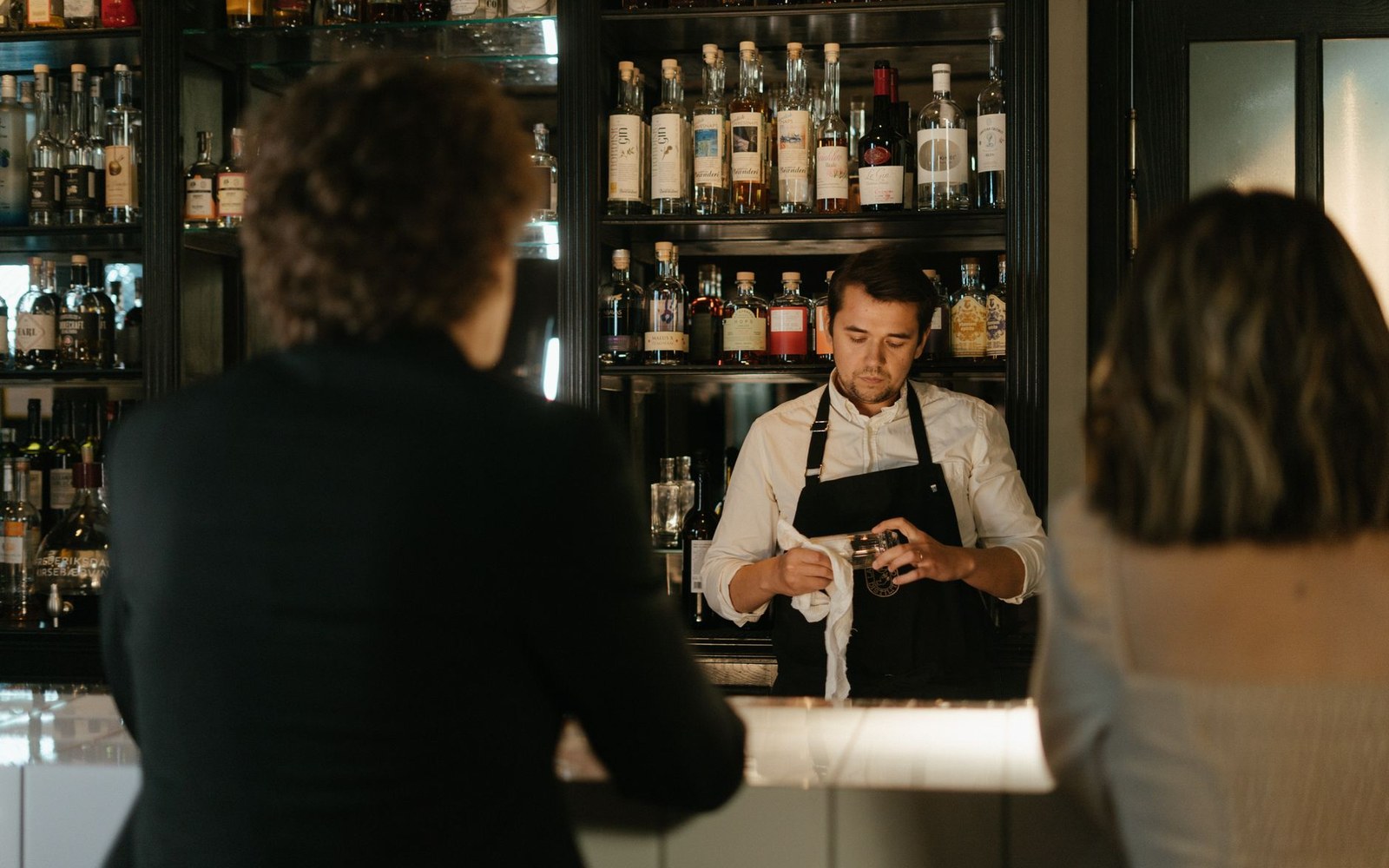
The bottles you can see before you order tell you almost everything you need to know.
The Arrangement Is an Argument
Before any bartender speaks to you, the back bar is already making a case. That case is either coherent or it isn't, and knowing how to read it will save you from ordering the wrong drink in the wrong room.
Start with the overall shape of the display. A well-run back bar is organised around intention — spirits grouped by category, the house's actual strengths given the best sight lines, the call and premium bottles positioned so a customer's eye moves naturally toward them. When a back bar has that kind of logic, it suggests a bar that knows what it sells and has thought about how to sell it. When the arrangement is random — scotch next to blue curaçao next to an unlabelled speed-rail overflow — the message is that nobody has decided what kind of bar this is, which usually means nobody has decided what kind of drinks to make well.
Height matters. The bottles at eye level are the ones the house is proudest of or most wants to move. Bottles pushed to the low shelf or the extreme edges are either slow sellers or space-fillers — purchased once for a single cocktail menu and never restocked. Both kinds of bottle are useful information. If the gins at eye level are three or four expressions of real variety — a classic London dry, something botanical, something contemporary — that's a bar with an opinion about gin. If there's one barely-touched bottle of a major-brand gin on the bottom shelf and the eye-level real estate is given over to eight bourbons, the bar is telling you where it lives.
Condition and Turnover
Dust is the most reliable diagnostic tool you have. A bottle with a visible coating of dust is a bottle that hasn't moved in months. In a warm room with any traffic at all, bottles used daily stay clean. A back bar where five bottles in ten are dusty is telling you that half its range is decorative — bought to look impressive, not to be drunk. Order something that has clearly been handled recently, and you'll probably be better off.
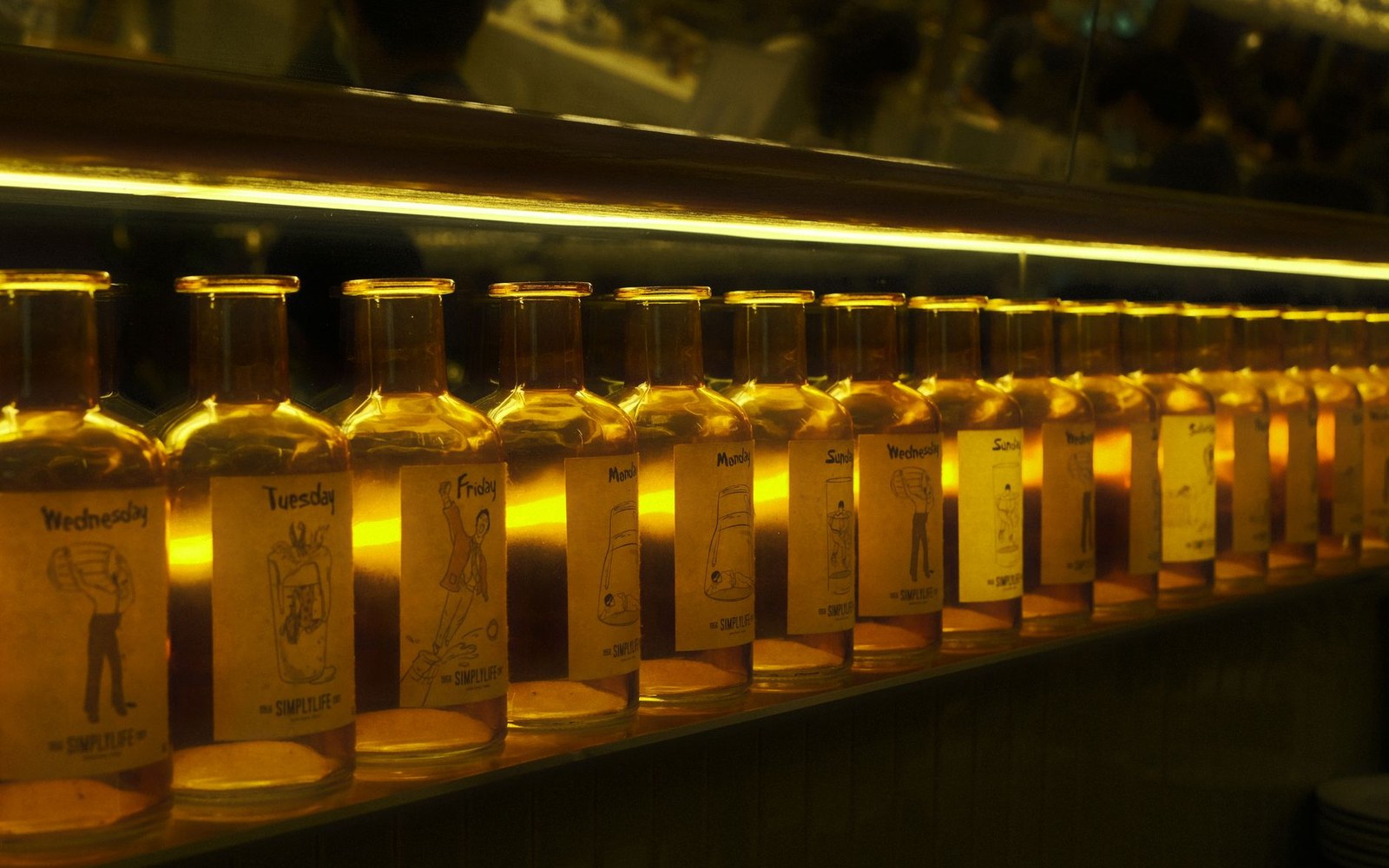
Look at the fill levels. This sounds obvious, but a row of bottles at identical fill levels suggests either a very recently restocked bar or a display practice of moving the empties to the front and the fuller bottles behind — which is theatre, not service. Genuinely busy bars have ragged fill levels because bottles are used at different rates. The half-empty bourbon next to the nearly full rum is honest. The display where every bottle is artfully three-quarters full is, at best, managed. At worst, the bottles at the front have been emptied and refilled with something cheaper, a practice old enough that it has names in multiple languages. You won't be able to verify this, but knowing the tell is still useful.
Label condition is its own story. A spirit that has been sitting in a window or under strong track lighting will show it — faded labels, bleached colours. This tells you the bar has poor cellar instinct, or no one who cares about UV degradation in spirits. It's a small thing, but it's also the kind of small thing that compounds: a bar that doesn't notice label fade probably doesn't notice when something is past its best after opening, either.
What The Selection Is Actually Saying
The ratio of branded to unbranded is telling. A back bar heavy with branded spirits — every slot taken by a recognisable label from a major conglomerate — is a volume operation. That's not automatically a criticism; a high-traffic sports bar or a hotel lobby bar runs on branded product because the customers know what they're ordering and the bar knows its model. But if you've walked in hoping for something considered, a back bar of entirely recognisable corporate labels suggests you're in the wrong room.
The presence of a genuine house selection — spirits the bar has chosen, not simply stocked by default from a distributor's standard list — is one of the better signs. It doesn't have to be obscure. A small number of carefully chosen expressions, especially in whichever category the bar seems to care about most, tells you that someone has done tasting work and made decisions. An overstuffed back bar with forty bottles of superficially different things, on the other hand, often means less choice in practice: the bartenders can't know forty spirits well, so you'll get whatever someone reaches for first.
The speed rail — the lower tray closest to the bartender's hand — is where the house pours live. If you can see it, note what's there. Those are the default spirits for any mixed drink you order without specifying a brand. In a bar that has thought about it, the speed rail spirits are decent working bottles that wouldn't embarrass a cocktail. In a bar that hasn't, they're whatever was cheapest from the last order. What you order in a room you don't know often comes down to this: read the back bar first, and let what you find there steer you toward something the house actually knows how to use. The bottles are evidence. They've been there longer than the bartender's shift, and they don't lie.