Long Answers · 6 min read · By the house
What A Dive Actually Is
The long version of the argument introduced in 'Is This Place A Dive?' — a full essay on the misuse of the word, the social function of the real thing, and what is lost when a bar performs dive-ness rather than being it. The flagship piece.
The word has been taken hostage
Somewhere in the last two decades, the word dive got annexed. It started appearing on chalk signs. It showed up in the names of bars that opened with a PR agency and a soft-launch list. By the time a place was advertising itself as a dive — in the window, on the website, on a neon sign hung above the urinal — the word had already been emptied of the thing it was trying to name.
This is worth being precise about, because the confusion is doing real damage. Not moral damage, not community damage — though sometimes those too — but a quieter kind: it is making it harder to think about what a certain kind of room actually does, why people need it, and what is lost when it disappears. If you cannot name a thing accurately, you tend not to notice when it goes.
A dive, in the original and useful sense, is a bar that was not designed. Not: a bar designed to look undesigned. Not: a bar that chose a palette of scuffed and dimmed. A bar that simply opened, kept operating, and became itself through use and time and the indifference of everyone who ran it to the question of what it looked like. The grime is real grime. The carpet, if there is carpet, is real carpet that has survived because no one could agree on what to replace it with. The mirror behind the bar has a liquor company's name on it because someone handed it over decades ago, not because someone sourced it for a reclaimed-industrial aesthetic.
That distinction — accumulated versus performed — is the whole argument.
What the real thing actually does
The social function of a real dive is not nostalgia, though nostalgia frequently attaches to it. It is not authenticity, though that word will be applied. The function is simpler: a dive is a room where the criteria for belonging are minimal. You do not need to know the right order. You do not need to dress a particular way. You do not need to perform enthusiasm for a rotating tap list or demonstrate that you understand why the cocktail takes twelve minutes. You need money for a drink, and you need to be tolerable enough that the bartender will serve you again.
This is a low bar, and low bars are useful. Bars with lower entry requirements accommodate a wider range of the human situation. The person who has just had a bad day at work and cannot manage sociability. The regular whose life has contracted to the point where this room and these people are most of what he has. The drinker who simply wants a cold beer and no performance around it. These are not edge cases. These are common states of being, and a certain kind of room has always existed to receive them without question.
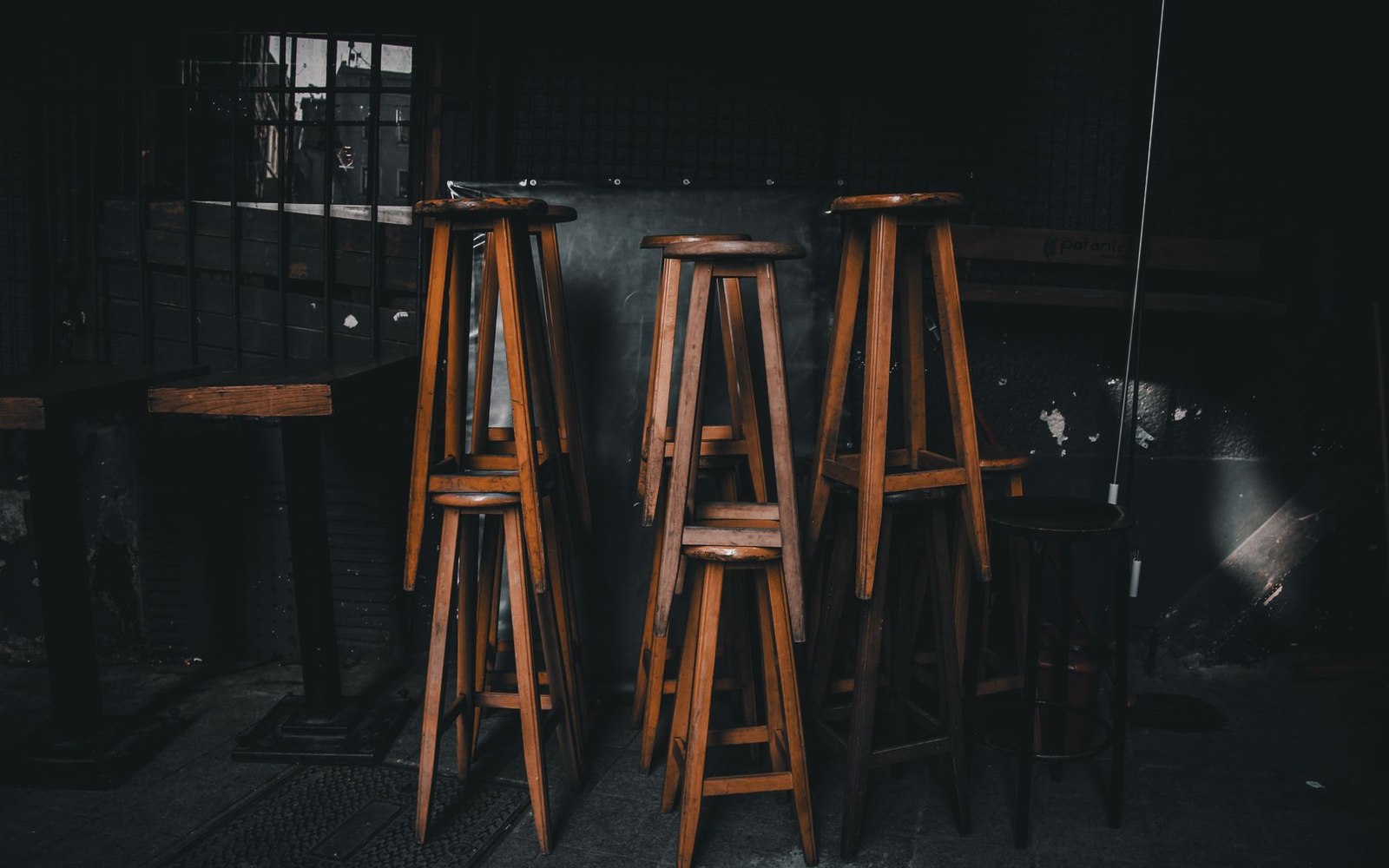
The trouble with the performed dive is that it looks like this room but is not. It has retained the signifiers — the unmatched stools, the cheap domestic beer at the front of the list, the lack of ambient music with a recognisable curatorial logic — but it has not retained the condition those signifiers emerged from. Specifically: it still has criteria for belonging. They are just less legible. The performed dive has a clientele that recognised it as a performed dive and chose it for that reason, which means anyone who walks in without that knowledge will feel, dimly and perhaps wordlessly, that they are in the wrong place. The low bar is illusory. The ease is designed.
What is lost when a bar performs dive-ness rather than being it
The loss is real and it compounds. The first loss is practical: the genuine room gets displaced. In any neighbourhood where property value is rising and landlords are paying attention to what tenants can sustain, the real dive exists under pressure. When the performed dive captures the cultural energy around the word — the think-pieces, the fond social-media documentation, the status of being a regular — the genuine article gets none of it. It just gets older, smaller, less funded, more tired, until it closes without ceremony and gets replaced by something with its ghost.
The second loss is conceptual. Once enough people have encountered only performed dives, the word loses its descriptive precision. It starts to mean something like: casual, affordable, not a cocktail bar. Which is a reasonable category, but not the same one. And the difference matters because the thing that made the real dive valuable — the minimal criteria, the genuine welcome-without-question, the democratic indifference — is not a design choice. It cannot be reproduced by choosing the right stool height.
There is a third loss that is harder to name. A bar that has been genuinely used over time holds something that new rooms, however accomplished, do not. Call it sediment. You can read it in how to read a back bar — the logic of a shelf that was not curated, only accumulated — but it shows in the whole room, not just the bottles. The particular angle of a regular's posture, the bartender's efficient movements around a layout that was not designed ergonomically but that she has learned so precisely it no longer matters, the conversational shorthand between people who have been coming here for years without ever becoming friends exactly. This sediment is not replicable. A room either has it or it does not, and it can only be acquired by being, first and repeatedly, a room where people actually go.
“The low bar is illusory. The ease is designed.”
The performed dive has no sediment. It has backstory, sometimes a very convincing one, but backstory is not the same thing. It lacks the thing time actually produces: the strange specificity of a room that was shaped by its particular people.
How to tell which room you are in
The question most worth asking when you walk into a bar that seems like it might be the real thing is: who is here, and why are they here? In a genuine dive, the answer to the second question tends to be: because this is where they go. Not because this place was recommended, not because it appeared on a list of bars that capture the spirit of a neighbourhood, not because they found it charming. Because it is theirs, in the way that habit and familiarity make things yours.
In a performed dive, the clientele tends to be there because they chose it, which sounds like the same thing but is not. Chosen bars are evaluated bars. A room you go to because it is yours is a room you stopped evaluating, maybe years ago. The difference shows in how people sit in it. Ease that is earned feels different from ease that was the pitch.
None of this is to say the performed dive is without value. A room that makes cheap beer and no pretension available in a neighbourhood that has lost everything else is still doing something useful. But it is doing a different thing, and calling it the same thing causes a confusion that ultimately serves no one — not the drinker trying to understand what they are looking for, not the people who ran real dives for decades without anyone writing about them, and not the word itself, which was, before all of this, a perfectly serviceable way of describing a room where the bar was low and the welcome was real.