Long Answers · 5 min read · By the house
Why The Room Matters More Than The Drink
The central argument of the whole site made explicit: that what people remember about a bar is almost never the drink they ordered, and that the room — its light, its noise, its geometry — is the actual subject. A long discursive essay.
The drink is the occasion. The room is the memory.
The Question Nobody Thinks to Ask
Ask someone about a bar they loved, a bar they still miss years after it closed or years after they left the city, and notice what they actually describe. They'll tell you about the light — how low it was, how it caught the bottles on the back bar, how it made everyone look like a better version of themselves. They'll tell you about the noise, the particular register of it, whether it was a hard room or a soft one, whether the conversation had to be leaned into or could just be talked. They'll tell you about the geometry: the long room with the bar running down one wall; the tight place where everyone was pressed into the shape of a crowd without quite meaning to be. They'll tell you who you could see from where you sat and who couldn't see you. They'll tell you what it smelled like.
Almost nobody tells you about the drink.
Oh, they might reach for it — they might say the beer was cold, the whiskey was good, the bartender made a particular thing they've never had quite the same since. But these are scene-setting details, furniture in the story. If you press them, they can't usually name the label or the expression. What they remember is themselves inside a room, and what that room made possible.
This is not a minor or incidental observation. It is the central fact about how bars work and why they matter, and it is almost completely absent from the way bars are currently discussed. The public conversation about drinking — the reviews, the guides, the social-media documentation — is overwhelmingly organised around the drink. The list of bottles. The technique of the bartender. The sourcing of the ingredient. These things are worth caring about, and this guide cares about them, but they are not the primary thing. They are the score; the room is the instrument.
What Light Actually Does
“The drink is the occasion. The room is the memory.”
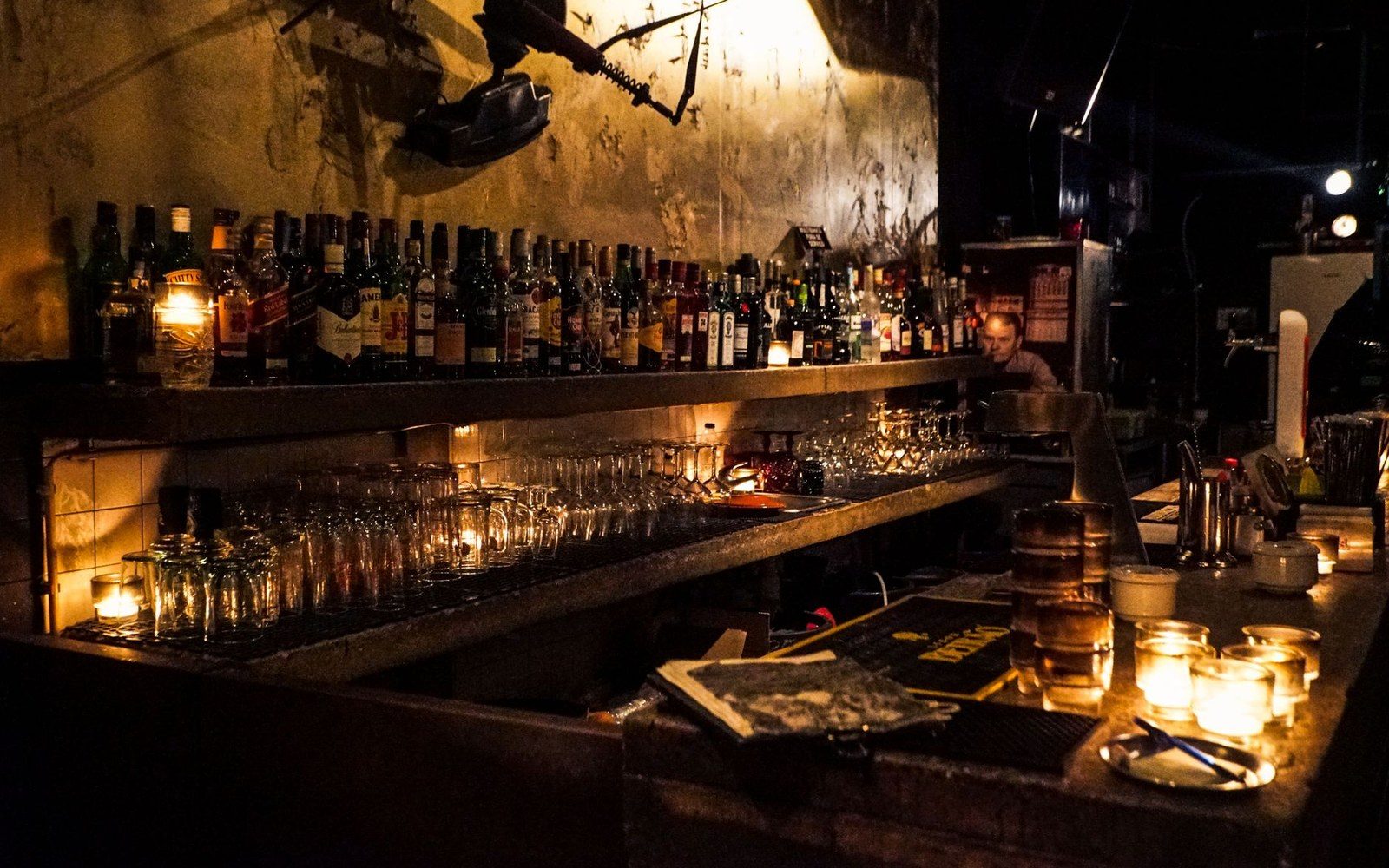
Consider light as an example, because light is the element of a bar room that operates most directly on the emotional state of the people inside it. A room lit to the level of a kitchen or an office puts everyone on display equally and neutrally, which is to say it puts everyone slightly on trial. You can see the stains on the table, the state of the upholstery, the expressions people are making before they've decided to make them. This is not comfortable. It does not promote the loosening of the self that a bar is, in part, for.
A properly dark room does the opposite. It allows for selective attention. You can see the person across from you, which is where your attention belongs, and the rest becomes peripheral — present, ambient, human, but not interrogated. The low-lit bar is not hiding anything sinister; it is doing what architecture has always done when it is doing its job, which is to arrange the attention of the people inside it toward the things that matter.
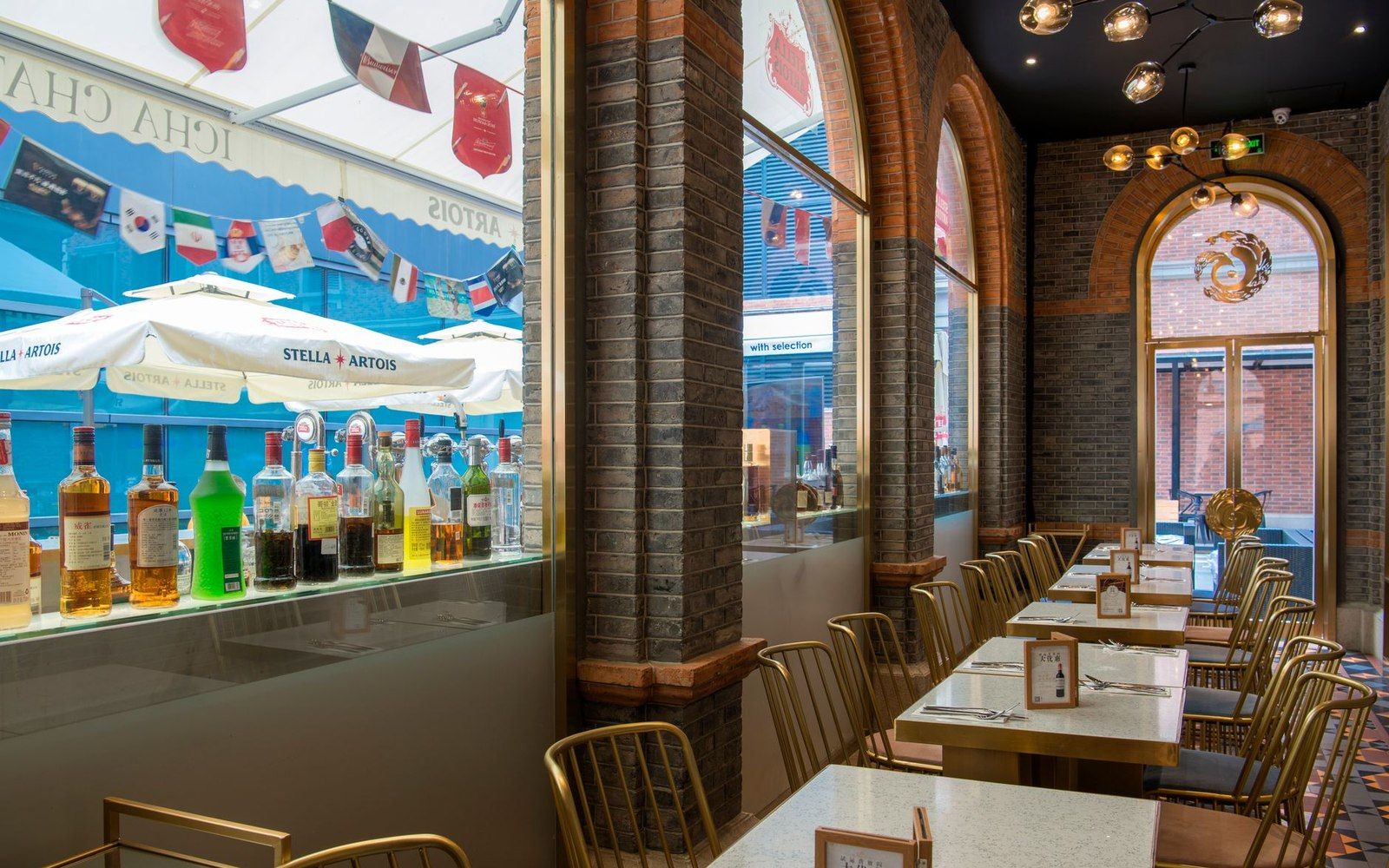
This is also why the era of the bright, maximally photographable bar has been, on the whole, a retreat from what bars are for. A room designed to be shot is a room designed for an audience that isn't there. The actual people inside it are, functionally, extras. The light tells them so.
Noise works the same way, though its calibration is harder. A silent bar is an exposed bar — every conversation is potentially everyone's conversation, which shuts most conversations down before they get interesting. A bar that has reached the correct ambient noise level — call it a warm blur — provides acoustic cover without requiring effort. People talk more easily because their words aren't arriving in a vacuum. The conversations lean in, the room leans in, and the evening develops its own internal pressure. But a room past that threshold, one where the music or the crowd has pushed the noise into the register where you can't be heard without repeating yourself, has crossed from cover into obstacle. The bar is no longer working.
Most bars, most evenings, are either too quiet at the start or too loud by the end. The window is not wide. This is part of why people who drink in bars regularly tend to arrive and leave by feel rather than by clock — they are tracking the room, not the time.
Geometry Is Argument
Then there is the shape of the place, which is the argument the room makes about how people should arrange themselves inside it. A long, narrow bar with stools along one side and tables along the other is an argument for a particular kind of sociability: you are near strangers at the bar, which makes brief contact natural; you can move to a table if you want to close the circle. A room full of booths is an argument for privacy, for settled-in evenings, for the kind of conversation that needs walls around it. A circular room with the bar at the center is an argument for performance, for the bartender as the axis of the whole thing, for a self-consciousness about being there.
None of these is better than another. But they are different arguments, and a drinker who has walked into the wrong argument for what they needed that night will feel it, will feel off without knowing quite why, and will leave earlier than they meant to. This is not a failure of the drink. The drink was fine. The room was wrong.
The reason this matters beyond the evening itself — beyond the question of whether Tuesday was good or not — is that bars are among the few remaining public rooms where nothing is required of you. You do not have to produce anything, attend to anything, perform a transaction, or improve yourself. You are permitted to simply be inside a room with other people, talking or not, drinking something you chose because it appealed to you, taking up a reasonable portion of the available space. This permission is not nothing. In a life increasingly structured around productivity and optimization, the bar room offers something rarer: the right to occupy a room without justification.
What makes or breaks that experience — whether the evening opens up or stays flat, whether you leave feeling you were somewhere or feeling you merely passed time — is almost entirely the room. The drink is the occasion you gave yourself to be there. The room is what happens to you once you arrive.
This guide is organised around that premise. Reading a back bar, choosing where to sit, knowing when the room has peaked and the evening is asking you to leave — these are all acts of reading a place rather than consuming a product. The drink unlocks the door. What you find inside is architecture.